Description
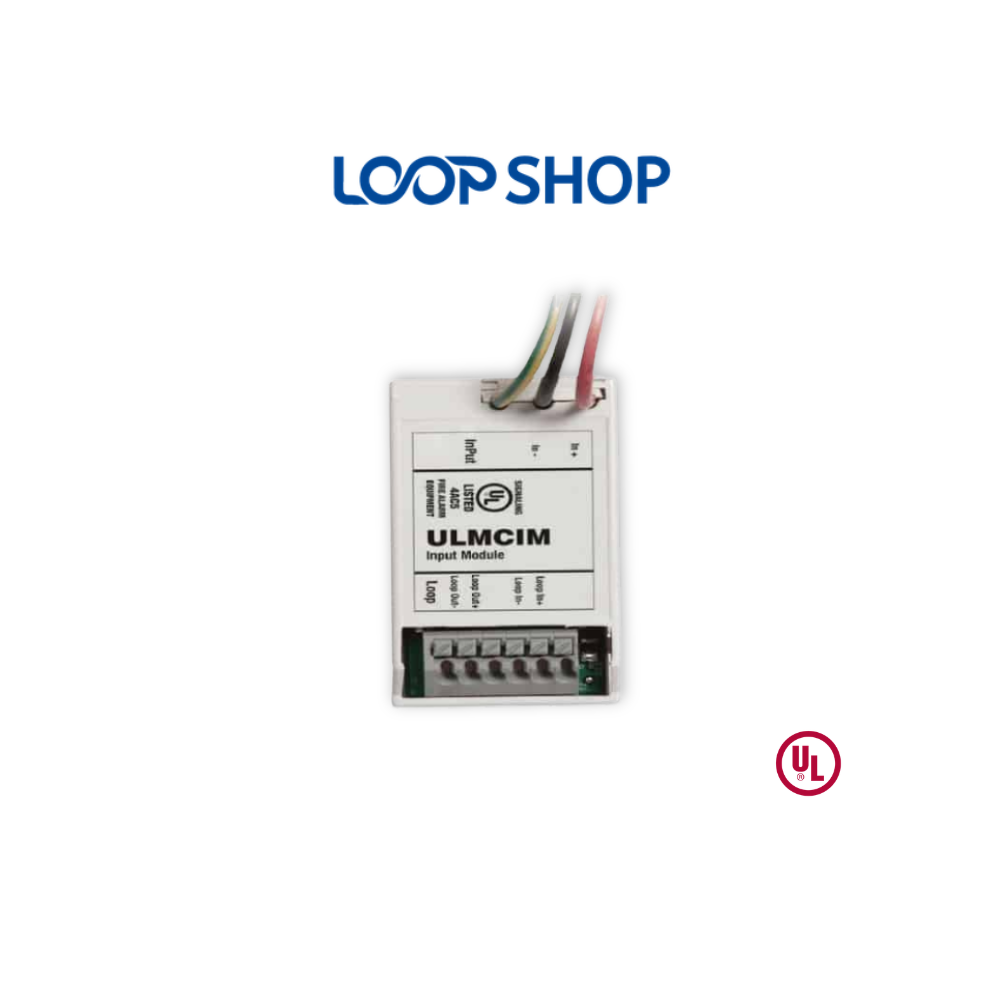
The Cooper ULMCIM intelligent addressable micro single channel input module represents an advanced life-safety engineering solution designed to bring critical third-party system data onto your main addressable loop. Engineered to provide high-speed, reliable status tracking inside commercial towers, hospital centers, industrial complexes, and integrated automated facilities, this ultra-compact module provides seamless electronic interfacing between your fire command network and external facility infrastructure.
By delivering native software-driven soft-addressing functionality, the high-performance Cooper ULMCIM eliminates traditional technical configuration bottlenecks. The master panel automatically discovers, numbers, and maps the device during initialization loops, completely removing the setup time and configuration mistakes associated with older mechanical binary dip-switches.
The versatile Cooper ULMCIM is optimized for applications requiring continuous monitoring of a set of normally open, volt-free contacts. This makes it an ideal engineering match for capturing fire signals from auxiliary control panels, tracking main sprinkler system water flow switches, verifying generator start-up states, tracking flow valve positions, and ensuring fire doors are fully closed during an evacuation event.
Every component of the compact Cooper ULMCIM is designed for long-term project reliability. Outfitted with an integrated short circuit line isolator, the module separates wire line damage locally to prevent a localized hardware failure from taking downstream loop devices offline. Its miniature form factor fits comfortably into external machinery cabinets or a shared, space-saving micro module cluster box, giving system designers maximum flexibility when planning distributed building architectures.
⚙️ Key Cooper ULMCIM Micro-Monitoring Capabilities
- Complete Initiating Line Supervision: Monitored input architecture utilizes a balanced trigger and end-of-line resistor setup to actively detect open, short, or ground faults.
- Built-In Circuit Isolation: Equipped with an integral short circuit loop isolator that limits electrical faults safely to a single branch line segment without disrupting global loop operations.
- Multi-Module Group Box Scaling: Miniature physical footprint allows up to three independent single-channel micro units to mount cleanly inside a single empty ULBU box casing.
- Automated Plug-and-Play Discovery: Identified programmatically by the central fire station as an intelligent input device, ensuring immediate tracking communication upon loop wire connection.
🔒 Advanced Signaling Circuitry & Wiring Guidelines
- Class A Style 7 Supervision: Operates efficiently across high-capacity addressable data loops, ensuring robust data return paths even if a single cable rupture breaks the physical wire path.
- Spliceless Captive Terminal Block: Provides a secure terminal landing track matching conductors up to 12 AWG, preventing loose connections or inline wire-wrapping failures.
- Commercial Cable Flexibility: Optimizes data collection paths across multiple premium industry wire runs, including FIRETUF, FP200, and MICC mineral-insulated configurations.
- Supervised Class B Initiating Line: Standard connection terminal lines process input monitoring data using Class B Style C criteria for high-integrity supervision.
📋 Engineering & Architecture Resources
Verify precise technical waveform parameters, alarm current draw limits, and detailed wiring diagrams in the official manufacturer submittal document: eaton-fire-addressable-micromodules-ulmcim-datasheet.pdf. You can cross-verify all international design safety compliance registries directly through the official UL Product iQ Directory.
📥 Download Official Technical Datasheet
Technical Specifications Table
| Property |
Specification Details |
| Brand / Manufacturer |
Eaton Cooper |
| Catalog Model Number |
ULMCIM (Micro Single Channel Input Unit) |
| Global Factory Order Reference |
400013FIRE-0049X |
| Industry Safety Certifications |
UL 864 Listed (Control Units and Accessories) |
| Signaling Line Circuit (SLC) Type |
Style 7, Class A, Supervised, Power Limited Addressable Loop |
| SLC Loop Standby Current |
332 µA nominal circuit tracking pull |
| Initiating Circuit Class Type |
Class B, Style C, Supervised, Power Limited Input Line |
| Input Pulsed Operating Voltage |
8.4Vpp (Pulsed regularly every 1 second interval) |
| Maximum Initiating Line Current |
1.2 mA input circuit active draw threshold |
| Trigger Resistor Requirement |
5.6 kΩ Resistance matching values |
| End of Line (EOL) Resistor |
22 kΩ Coded supervision line resistor component |
| Terminal Block Wire Gauge |
Accepts solid copper conductors up to 12 AWG Maximum size |
| Maximum Loop Line Impedance |
16 Ohms structural loop path limits |
| Ingress Protection Seal Rating |
IP40 Casing structural protection index |
| Operating Temperature Environment |
32°F to 120°F (0°C to 49°C) max indoor boundaries |
| Relative Humidity Tolerances |
0% to 93% RH non-condensing moisture boundaries |
| Micro Chassis Size (H x W x D) |
65 mm Height x 35 mm Width x 18.5 mm Depth profile dimensions |
| Net Physical Hardware Weight |
0.05 kg minimal mass profile weight |
Frequently Asked Questions (FAQ)
Q1: What is the primary purpose of the Cooper ULMCIM micro input interface?
A: The module acts as an addressable translator for external equipment. It allows the main fire alarm panel to monitor normally open, volt-free contacts from third-party hardware such as sprinkler switches, ventilation dampers, pump systems, and auxiliary fault monitors.
Q2: Why must the 22kΩ end-of-line resistor always be installed on the module input?
A: The end-of-line resistor is mandatory to complete the supervision circuit. It allows the micro module to continuously monitor your field wiring paths, instantly reporting open circuits, line breaks, or short-circuit wiring faults to the control panel, even if the input channel is currently unmapped.
Q3: What is the operational difference between the ULMCIM and the ULMCIM-C hardware variant?
A: While the standard model configures as a generic addressable input device, the ULMCIM-C variant is optimized to interface directly with fire alarm pull stations. The panel recognizes the sounder module variant as a distinct call-point, allowing up to 200 units to be mapped across a single data loop configuration.
Q4: Do I need to manually configure binary address switches on this input module?
A: No. The device utilizes advanced electronic soft-addressing algorithms. The central fire control hub automatically discovers and catalogs the module, completely avoiding physical addressing errors during commissioning loops.
Q5: Can I mount multiple micro interfaces inside the same enclosure space?
A: Yes, absolutely. Thanks to their minimized dimensions, fire system integrators can stack up to three independent micro input or output modules together within a single, empty ULBU micro module surface box housing footprint.






Reviews
There are no reviews yet.