Description
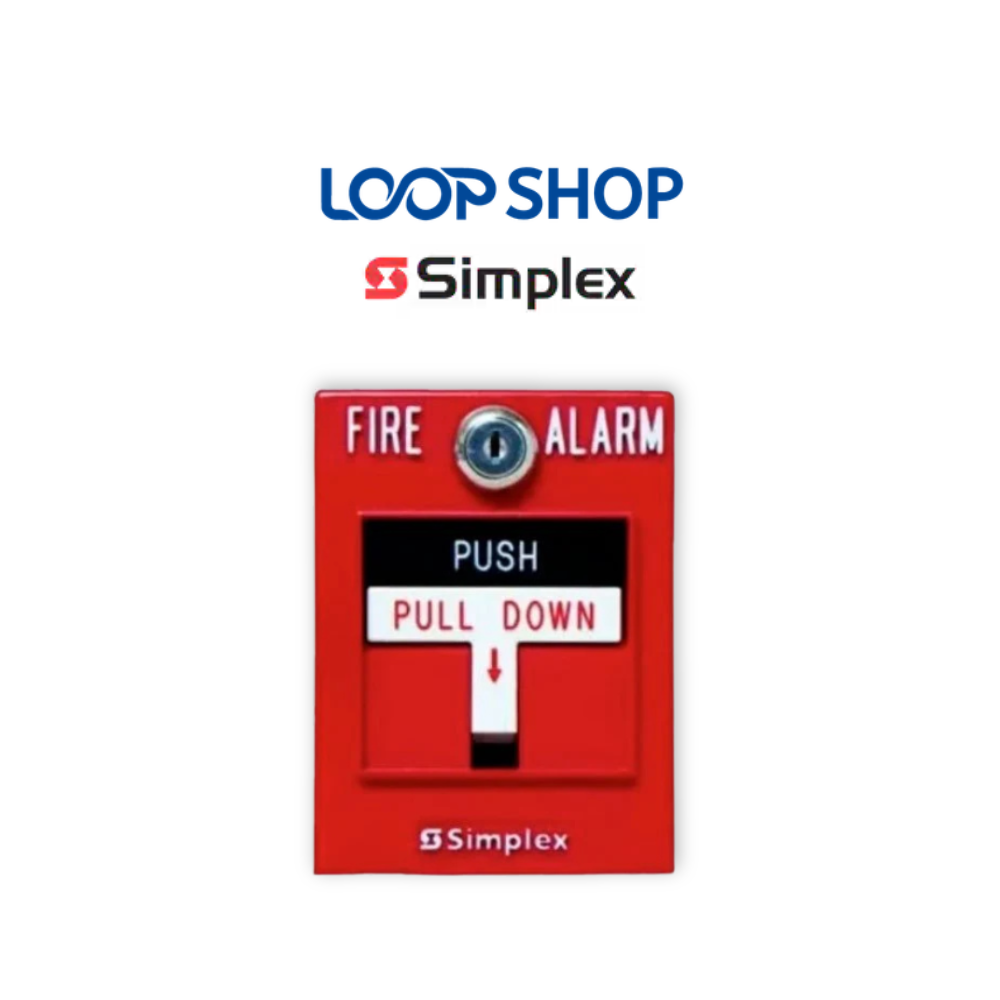
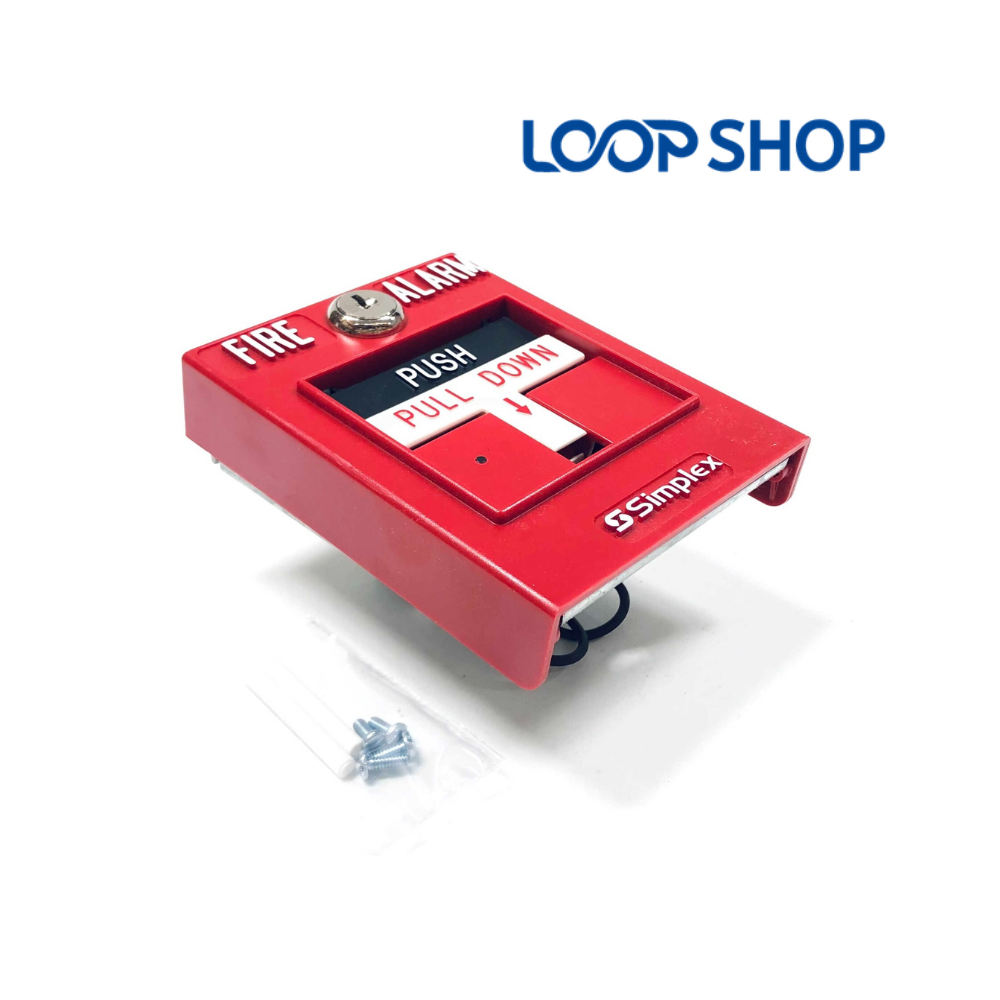
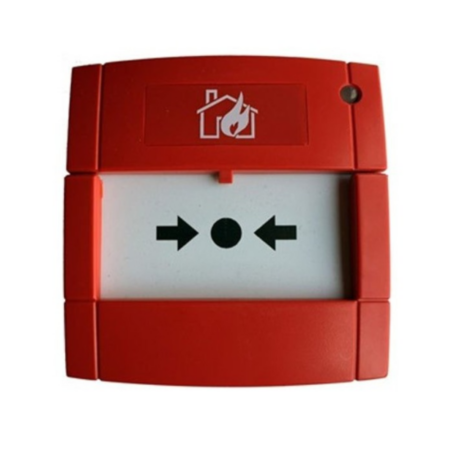
The Simplex 4099-9006 Addressable Manual Call Point is an enterprise-grade, high-integrity life safety peripheral engineered to deliver secure manual activation across distributed commercial, institutional, and industrial fire networks. Housed in a rugged, high-impact Lexan polycarbonate enclosure with crisp raised lettering, this heavy-duty device integrates a classic pull-station footprint with an embedded Individual Addressable Module (IAM). Designed to run directly over high-speed addressable loops, it delivers precise zone location identification during emergencies, serving as an elite safety milestone for enterprise engineering projects.
Technical Specifications
| Model Number |
4099-9006 (Double Action, Push Operation, English Language) |
| Manufacturer Line |
Multi-Application Addressable Peripherals by Simplex (Johnson Controls) |
| Country of Origin |
Mexico |
| Communication Circuit |
IDNet Addressable Loop (Addresses 1-250) | MAPNET II Mode (Addresses 1-127) |
| Power & Wiring |
Draws power and data directly via a single wire pair over the addressable loop |
| Addressing Method |
8-Position internal DIP switch located beneath a resealable protector label |
| Wiring Terminals |
Heavy-duty screw terminals matching solid/stranded lines from 18 to 14 AWG |
| Operating Environment |
32°F to 120°F (0°C to 49°C) intended for stable indoor installation environments |
| Relative Humidity Window |
Up to 93% RH at 100°F (38°C) non-condensing moisture boundaries |
| Chassis Footprint Dimensions |
5.0″ H x 3.75″ W x 1.0″ D (127 mm x 95 mm x 25 mm) |
| Safety Certifications |
UL Listed to Standard 38, ULC Listed, FM Approved, CSFM Certified |
⚙️ Engineering & Architecture Resources
Verify loop communication limits, mounting box specifications, and electrical wire limits in the official manufacturer technical document: S4099-0005.pdf.
📥 Download Official Technical Datasheet
Dual-Action Nuisance Alarm Protection & Intelligent Diagnostics
The primary benefit of deploying the Simplex 4099-9006 Addressable Manual Call Point is its dual-action operational design, which requires two deliberate, separate physical actions to initiate an alarm loop[cite: 20]. The operator must first push back a spring-loaded front plate marked PUSH to uncover the recessed internal lever mechanism, and then firmly pull the primary white lever down[cite: 20]. This two-step process breaks an internal plastic break-rod and sends a latching signal to the central console panel[cite: 20]. This framework effectively deters malicious vandalism, accidental bumps, and false triggers in high-traffic hallways like school corridors, public hospitals, or shared commercial office spaces[cite: 20].
The embedded communication electronics are shielded inside a dust-resistant module enclosure, preventing circuit drift caused by construction dust or environmental debris[cite: 20]. An integrated high-visibility red LED indicator delivers rapid diagnostic verification at a glance, pulsing softly under regular loop polling conditions and turning solid red when an alarm is tripped[cite: 20]. To restore the device following an alarm, field technicians use a tamper-resistant reset key lock keyed identically to standard Simplex cabinets, simplifying facility management across large properties[cite: 20].
- Dual-Action Push-Then-Pull Mechanics: Drastically cuts down on nuisance corporate alarms while remaining fully ADA-compliant when mounted at code-specified heights[cite: 20].
- Front-Accessible Addressing: Features an 8-position DIP switch matrix under a resealable clear label, making address assignment straightforward before final mechanical latching[cite: 20].
- Durable Replaceable Break-Rods: Uses an optional 2099-9804 plastic break-rod that deters tampering without requiring you to replace expensive station heads after an emergency activation[cite: 20].
Frequently Asked Questions (FAQ)
Q1: How does a dual-action push station protect a commercial building from false alarms?
A: It requires two deliberate motions: first pushing back the protective plate and then pulling down the main lever[cite: 20]. This structure stops accidental activations from packages, cart collisions, or casual vandalism[cite: 20].
Q2: Does this manual station require independent external power wiring?
A: No. Operating power, digital diagnostic telemetry, and alarm flags are carried entirely over a single wire pair via your addressable IDNet or MAPNET II signaling line circuit, reducing material costs[cite: 20].
Q3: How do maintenance technicians verify or test the station without breaking parts?
A: Technicians can perform testing by physically pulling the lever, or run electrical tests by unlocking the housing with a standard cabinet key to trigger the internal switch without breaking the rod[cite: 20].
Q4: Is the replacement break-rod mandatory for the call point to operate safely?
A: No. The use of the internal plastic break-rod is completely optional; it serves as a visual indicator and vandal deterrent but does not restrict mechanical manual station function[cite: 20].
Q5: What are the standard electrical box mounting profiles for this model?
A: It mounts semi-flush into standard single-gang or 4-inch square boxes[cite: 20]. For surface-mounted projects, it pairs with matching red steel boxes or cast aluminum boxes[cite: 20].
Q6: What is the maximum distance limitation for a standalone branch line?
A: The addressable loop circuit supports wire layouts running up to 2,500 feet from the control unit to the farthest device, with total circuit limits extending up to 10,000 feet including T-taps.
Q7: Where is this addressable life-safety hardware manufactured?
A: This product is part of the global life-safety catalog of Johnson Controls and is manufactured in Mexico[cite: 20].



Reviews
There are no reviews yet.